
More Electrical Power, Less Wasted Energy
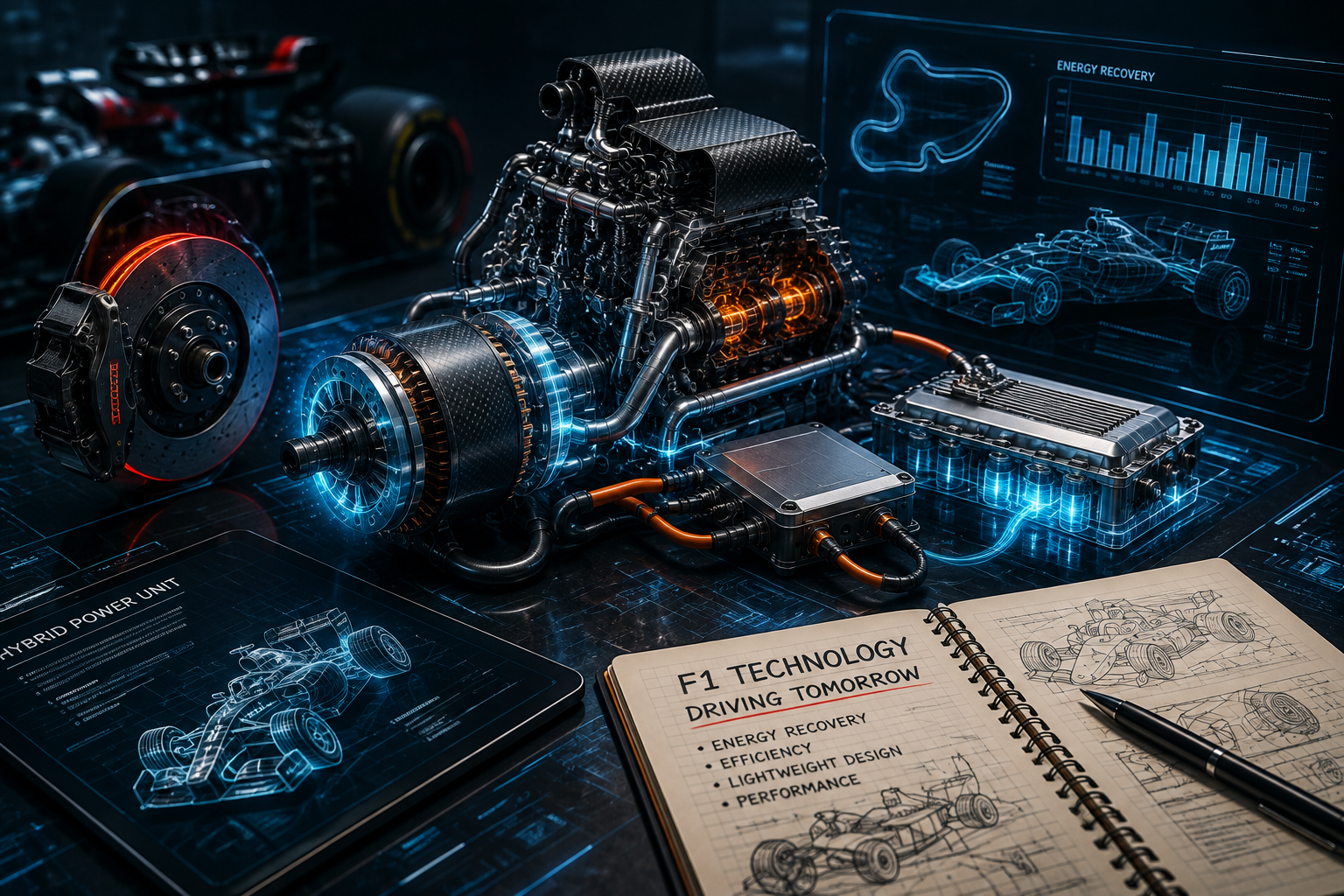
One of the clearest areas where F1 could influence road-car development is energy recovery. When an F1 car slows down, part of the vehicle's kinetic energy can be recovered and converted into electrical energy. The 2026 regulations increase the role of this system considerably. The FIA technical regulations allow the ERS-K to produce up to 350 kW of electrical power.
For road cars, the principle is already familiar through regenerative braking in hybrid and electric vehicles. F1 challenge is to make energy recovery work at very high speeds and under demanding conditions. Lessons from this environment can help engineers improve how efficiently vehicles capture, store and reuse energy.
Hybrid Powertrains Could Become Smarter
F1 hybrid systems also demonstrate how an internal-combustion engine and electric motors can work together rather than competing for the same role. The 2026 F1 power unit is designed to obtain a much larger share of its performance from electrical power. Formula 1 says the electrical contribution is intended to rise to around 50% of the power unit's output.
Road cars operate under very different conditions, but the basic engineering challenge is similar, how can electric assistance provide useful performance while reducing wasted energy? This could encourage more efficient hybrid systems, particularly as manufacturers look for ways to combine performance with lower fuel consumption.
When F1 Technology Reaches the Road
The transfer from Formula 1 to road cars is not simply theoretical. The Mercedes-AMG ONE provides a striking example. Mercedes-AMG describes the road-legal car as using technology directly inspired by Formula 1. Its powertrain combines a 1.6-litre V6 turbocharged engine with four electric motors, producing a claimed system output of 1,063 hp.
The car demonstrates an important point: F1 technology does not necessarily move unchanged from a race car into an ordinary vehicle. Instead, manufacturers can adapt ideas developed for racing to create new solutions for road-going vehicles.
Lightweight Engineering and Thermal Management
Weight reduction is another area where lessons from F1 can influence road-car engineering. Every kilogram matters in a racing car because lower mass can affect acceleration, braking and efficiency. Road cars have different priorities, including passenger comfort, safety and manufacturing cost, but lightweight materials and efficient structural design remain valuable.
Thermal management is equally important. High-performance hybrid systems generate substantial heat, requiring careful management of engines, electric motors, batteries and other components. Technologies developed to control temperatures in demanding racing environments could help manufacturers improve the efficiency and durability of future high-performance road cars.
From the Racetrack to Everyday Driving
The influence of Formula 1 on road cars is therefore less about copying a race car and more about transferring engineering ideas. Some technologies may take years to become practical or affordable for everyday vehicles, while others can appear sooner in high-performance road cars. The Mercedes-AMG ONE shows that sophisticated F1-derived hybrid technology can already be adapted for road use.
As the 2026 regulations increase the importance of electrical energy and energy recovery in F1, the relationship between motorsport and road-car development could become even more interesting. The technologies tested at the highest level of racing may continue to provide ideas for making future vehicles more efficient, powerful and technically sophisticated.
Career Takeaway
F1 technology highlights career opportunities in automotive engineering, hybrid powertrain development, battery systems, thermal management, lightweight materials, vehicle electronics and motorsport engineering. These fields combine mechanical, electrical and materials engineering with advanced testing and data analysis.
Useful Statistics
- The maximum electrical power permitted for the F1 ERS-K under the 2026 technical regulations.
- The approximate share of F1 power-unit output that Formula 1 says is targeted to come from electrical power under the 2026 regulations.
- The claimed system output of the Mercedes-AMG ONE's hybrid powertrain