
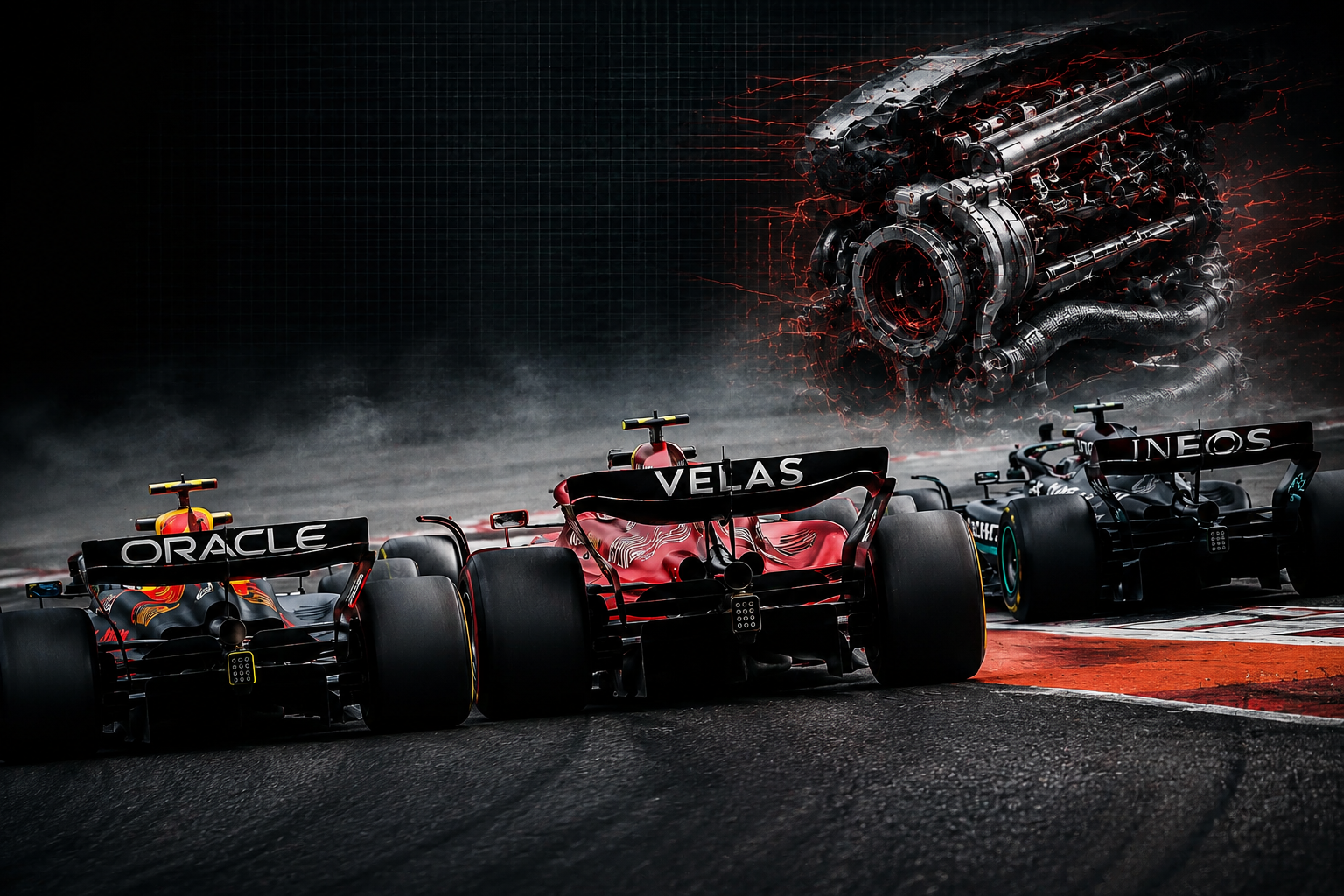
Why the Engine Battle Has Changed
The 2026 regulations introduced a new generation of Formula 1 power units, with a much greater role for electrical power and energy recovery.
ADUO was created to give manufacturers that fall behind the leading internal combustion engine an opportunity to develop their power units. The FIA compares engine performance during specific periods of the season. Manufacturers that fall at least 2% behind the leading ICE can qualify for additional development opportunities. The system is not designed to simply give slower manufacturers more performance. Instead, it provides additional opportunities to develop areas of the power unit within the existing regulations.
Ferrari Brings Its Upgrade to Monza
The latest development is particularly important for Ferrari. Ferrari is preparing to use one of its ADUO-permitted upgrades at the Italian Grand Prix in Monza. According to Autosport, the updated power unit includes changes to the combustion chamber and turbocharger, with a reported target of around 15 horsepower.
The upgrade comes at an important point in the season. Monza is known for its long straights and high-speed sections, making power-unit performance especially relevant. Ferrari will therefore have an opportunity to see whether its development work can reduce the gap to its rivals.
Mercedes Has Room to Develop Too
Ferrari is not the only manufacturer with additional development opportunities. The FIA first ADUO assessment placed Mercedes in the 2–4% performance-gap category, giving it one additional homologation opportunity for 2026 and another for 2027. Ferrari, Audi and Honda were placed more than 4% behind the benchmark and received two additional opportunities for each of those seasons.
Interestingly, the FIA second review period did not result in any new additional homologations. The third and final review period of 2026 will cover races from the Netherlands through Mexico City.
What Can Actually Be Upgraded
ADUO is not limited to one part of the engine. The permitted development areas can include parts of the internal combustion engine, turbocharger, exhaust system, electrical components, sensors, energy recovery system, MGU-K and control electronics. That makes the development battle more complicated than simply asking which manufacturer has the most powerful engine. Engineers have to balance combustion performance, electrical systems, energy recovery, cooling and reliability while staying within the technical regulations.
Why the Second Half Could Be Interesting
The latest developments could make the second half of the season particularly important for power-unit manufacturers. Ferrari Monza upgrade will provide an early opportunity to see how an ADUO development performs in a real race environment. Other manufacturers with available upgrade opportunities could also decide when and where to use their development allowance.
At the same time, Red Bull-Ford position as the current ICE benchmark gives its rivals a clear target. The result could be a second competition running alongside the championship itself. Drivers will continue fighting for points, while engineers work to find gains that could influence the performance of the cars in the remaining races.
More Than Just Horsepower
The 2026 engine battle is not simply about producing more horsepower. Formula 1 new power units combine an internal combustion engine with a much larger electrical contribution than previous generations. This means improvements in energy recovery, electrical efficiency, turbocharging and control systems can all affect how a car performs.
That makes the current engine development race a useful example of how modern motorsport is increasingly becoming a competition in energy management and engineering efficiency, as much as raw engine power.
What Comes Next
Ferrari upgrade at Monza will be one of the first major tests of how the new development system can influence the competitive order.
The FIA will continue monitoring power-unit performance during the final ADUO assessment period of the 2026 season. Whether the upgrades can significantly change the gaps between manufacturers will depend on how much performance each company can extract from its permitted development areas. For now, the second half of the 2026 season has added another layer to the F1 competition. The battle is no longer only between drivers and teams. It is also happening inside the power units.
Career Takeaway
The 2026 F1 power-unit battle highlights careers in automotive engineering, mechanical engineering, electrical engineering, thermodynamics, energy systems, control electronics and motorsport technology.
Useful Statistics
- 2%: The minimum ICE performance gap that can make a manufacturer eligible for ADUO.
- 2 additional upgrades: Ferrari, Audi and Honda were granted two additional homologations for 2026 after the first review period.
15 horsepower: The estimated gain reported for Ferrari's Monza engine upgrade. This figure should be attributed to Autosport rather than presented as an FIA-confirmed figure.