
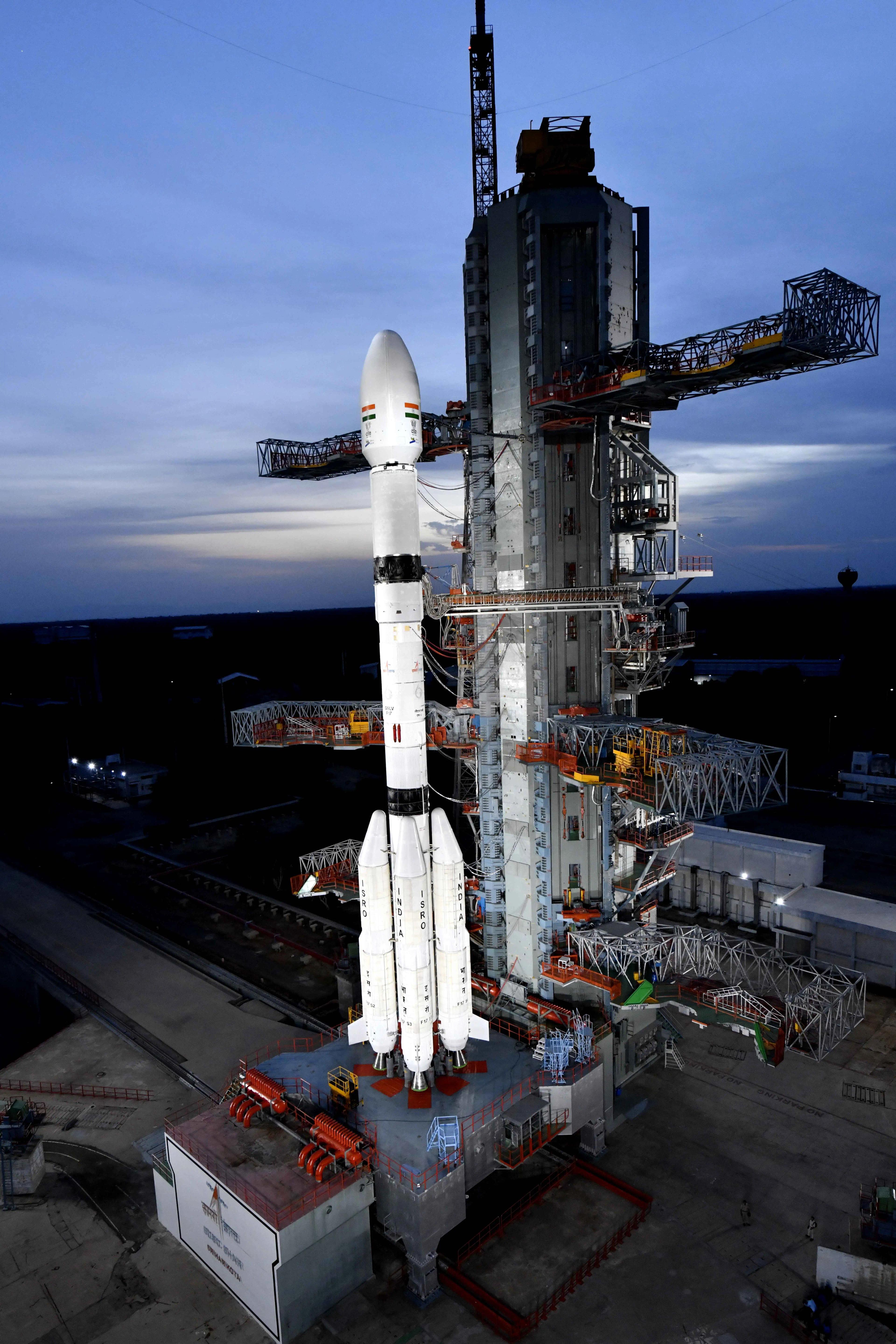
India has added another important mission to its Earth-observation programme with the successful launch of EOS-05 aboard GSLV-F17. The rocket lifted off from the Second Launch Pad at the Satish Dhawan Space Centre in Sriharikota at 2:55 a.m. IST on September 4 and successfully placed the satellite into its intended Sub-Geosynchronous Transfer Orbit (Sub-GTO).
The mission is significant because EOS-05 is described by ISRO as India’s first imaging satellite from geosynchronous orbit. Rather than simply adding another satellite to India's Earth-observation fleet, the mission introduces an imaging capability from a much higher orbital regime.
A New Approach to Earth Observation
Earth-observation satellites collect information about the planet using cameras and other sensors. Their data can support activities such as monitoring land, agriculture, weather and natural disasters. EOS-05 is designed to operate from geosynchronous orbit, roughly 36,000 kilometres above Earth. From such an orbit, a satellite can remain synchronised with Earth's rotation, allowing it to maintain a view over a particular region for long periods.
This is different from many Earth-observation satellites that operate much closer to Earth and move rapidly across the planet. The higher orbit therefore gives EOS-05 a different perspective for Earth imaging and observation.
The Role of GSLV-F17
Getting EOS-05 into its required orbit was the job of GSLV-F17, the 19th flight of India's Geosynchronous Satellite Launch Vehicle. The 51.7-metre-tall, three-stage rocket used a solid first stage with four liquid strap-ons, a liquid second stage and an indigenous cryogenic upper stage. Its payload fairing had a diameter of four metres.
After liftoff, the vehicle followed its planned flight sequence before releasing EOS-05 into Sub-GTO. The satellite can then use its own propulsion system and orbital manoeuvres to reach its intended operational orbit.
A Heavy Earth-Observation Payload
EOS-05 has a payload mass of approximately 2,367 kg, according to ISRO's mission brochure. This makes the mission notable not only for the satellite's orbital destination but also for the size of the spacecraft being carried by GSLV-F17. The mission also demonstrates the role of GSLV in delivering heavier spacecraft to higher-energy orbits. For India, this capability is important as satellite missions become increasingly sophisticated.
Why the Mission Matters
The value of EOS-05 goes beyond a successful launch. Earth observation provides information that can help governments and organisations understand changes on the ground and respond to events more effectively.
A satellite operating from geosynchronous orbit can offer a different combination of coverage, observation frequency and orbital persistence compared with lower-orbiting satellites. For India, EOS-05 therefore represents another step in expanding the country's ability to observe its territory and surrounding regions from space.
What Comes Next?
The successful launch is only one stage of the mission. EOS-05 was initially placed into Sub-GTO, rather than directly into its final geosynchronous orbit. Further orbital manoeuvres will be required as the spacecraft moves toward its intended operational position. Once operational, the satellite will add another perspective to India's Earth-observation capabilities and demonstrate how higher-orbit imaging can complement existing satellite systems.
Career Takeaway
The EOS-05 mission shows how aerospace engineering brings together launch vehicles, propulsion, orbital mechanics, satellite design and Earth-observation technology. For students interested in space careers, missions like this demonstrate that successful satellite operations depend on many engineering and scientific disciplines working together.
Useful Statistics
- GSLV-F17 stands 51.7 metres tall.
- The rocket had a lift-off mass of 420.5 tonnes.
- EOS-05 has a mass of approximately 2,367 kg.
- GSLV-F17 was the 19th flight of India’s GSLV.